New to growing or just decoding a strain page? This glossary explains the cannabis terms you’ll see across MarijuanaSeeds.com — from seed types to harvest. For strain-specific details, browse our strain library or shop seeds.
A
Autoflowering
Cannabis genetics that flip from the vegetative stage to flowering automatically with age instead of a light-schedule change. Autoflowers stay compact, finish fast (often 8–10 weeks seed to harvest), and are ideal for beginners or short seasons.
Aroma
The smell profile of a strain, driven by its terpenes — citrus, diesel, earthy, sweet, skunky and more. Aroma is a good preview of flavor and often hints at effects.
B
Bud
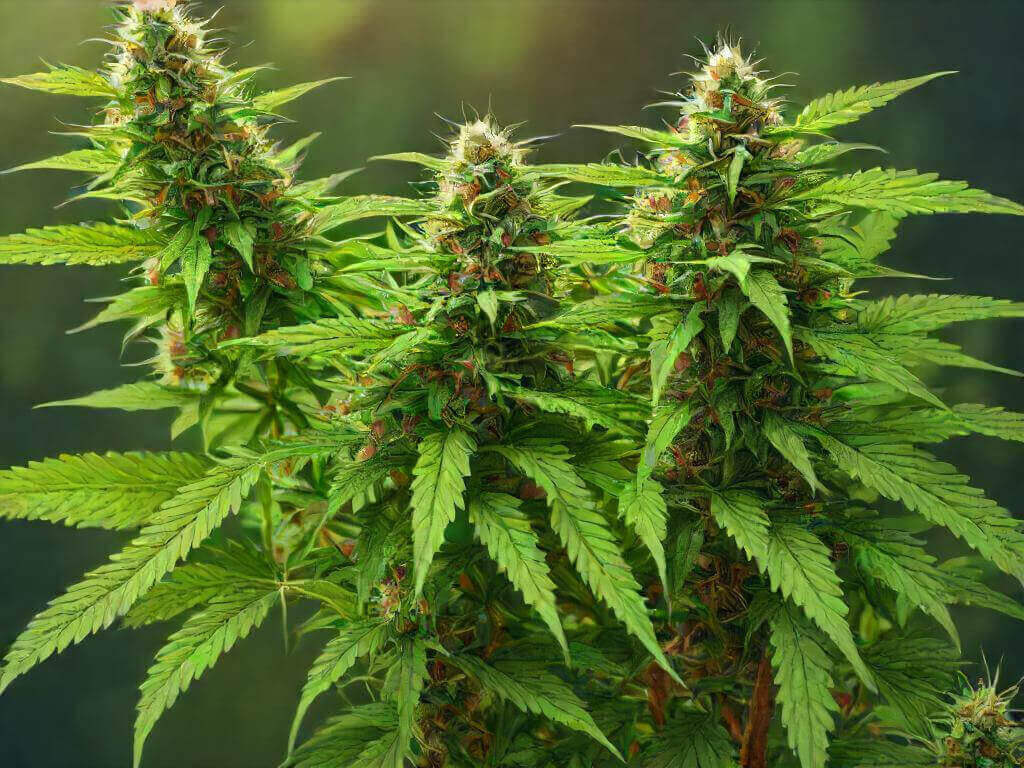
The dense, resin-coated flower of the female cannabis plant — the part that is harvested, dried, cured and consumed.
Bloom (Flowering) Stage
The growth phase when a plant stops stretching and puts its energy into producing buds. Indoors it is triggered by switching lights to a 12/12 schedule (photoperiod strains).
C
CBD (Cannabidiol)
A major non-intoxicating cannabinoid prized for relaxation and wellness support without a strong high. High-CBD strains are popular with medical users.
Cannabinoids
The active compounds unique to cannabis — THC, CBD, CBG, CBN and dozens more — that interact with the body’s endocannabinoid system to produce effects.
Clone
A cutting taken from a mother plant that roots into an exact genetic copy. Clones skip germination but require a healthy donor plant.
Curing
Slow-drying trimmed buds in controlled containers over weeks. Proper curing improves flavor, smoothness, potency retention and shelf life.
D
Dispensary
A licensed retail store where cannabis products are legally sold.
Drying
The first post-harvest step: hanging or racking buds for roughly 7–14 days until stems snap. Done before curing.
F
Feminized Seeds
Seeds bred so essentially every plant grows female — the sex that produces buds. Feminized seeds remove the need to identify and cull male plants.
Flowering Time
How long a strain needs in the flowering stage before harvest — typically 7–12 weeks depending on genetics. Listed on every strain profile on this site.
G
Germination
Sprouting a seed into a seedling — usually via the paper-towel method or planting directly in moist medium. The first step of every grow.
Genotype
A plant’s genetic blueprint. Together with environment it determines the phenotype — how the plant actually looks, smells and performs.
H
Harvest
Cutting mature plants when trichomes reach peak ripeness (cloudy-to-amber). Timing affects potency and effect character.
Hybrid
A strain bred from indica and sativa parents. Most modern strains are hybrids leaning one way (“indica-dominant” or “sativa-dominant”).
I
Indica
A cannabis type known for shorter, bushier plants with broader leaves and typically relaxing, body-centered effects — popular for evenings and sleep.
K
Kush
A famous strain family descending from Hindu Kush landraces — known for earthy-pine aroma and heavy, relaxing effects.
L
Landrace
A wild or locally adapted strain that evolved in a specific region — e.g., Afghani, Durban Poison, Thai. The building blocks of modern genetics.
N
Nutrients
The mineral feed plants need: nitrogen (N), phosphorus (P) and potassium (K) plus micronutrients. Needs shift between vegetative growth (more N) and flowering (more P/K).
P
Phenotype
The physical expression of a plant’s genetics — its height, structure, aroma, color and potency. Two seeds of one strain can show different phenotypes.
Photoperiod
Standard (non-autoflower) genetics that begin flowering when the light cycle shortens — naturally in fall, or indoors at 12 hours of darkness.
R
Regular Seeds
Seeds that can grow male or female (≈50/50). Preferred by breeders who need males for crossing.
Ruderalis
A hardy, low-THC cannabis subspecies from northern climates whose age-based flowering trait is the source of all autoflowering genetics.
S
Sativa
A cannabis type known for taller plants with narrow leaves and typically uplifting, cerebral, energetic effects — popular for daytime.
Seedling
The fragile early stage after germination — small rounded cotyledon leaves followed by the first true serrated leaves.
T
THC (Tetrahydrocannabinol)
The primary intoxicating cannabinoid — responsible for the “high.” Strain THC levels range from under 10% to 30%+ in modern hybrids.
Terpenes
Aromatic oils (myrcene, limonene, caryophyllene, pinene and more) that give each strain its scent and flavor and shape the character of its effects.
Trichomes
The tiny frosty resin glands on buds where cannabinoids and terpenes are made. Their color (clear → cloudy → amber) signals harvest readiness.
Topping
A training technique: cutting the main stem’s tip so the plant grows two main colas instead of one, producing a bushier, higher-yielding canopy.
V
Vegetative Stage
The growth phase between seedling and flowering when the plant builds size, roots and branches. Indoors it is maintained with 18+ hours of light.
Y
Yield
How much dried bud a plant or grow area produces — quoted per plant (outdoor) or per square meter (indoor). Genetics, light and training drive it.
Want to go deeper? Visit our growing guides for step-by-step tutorials, or start with how to germinate marijuana seeds.