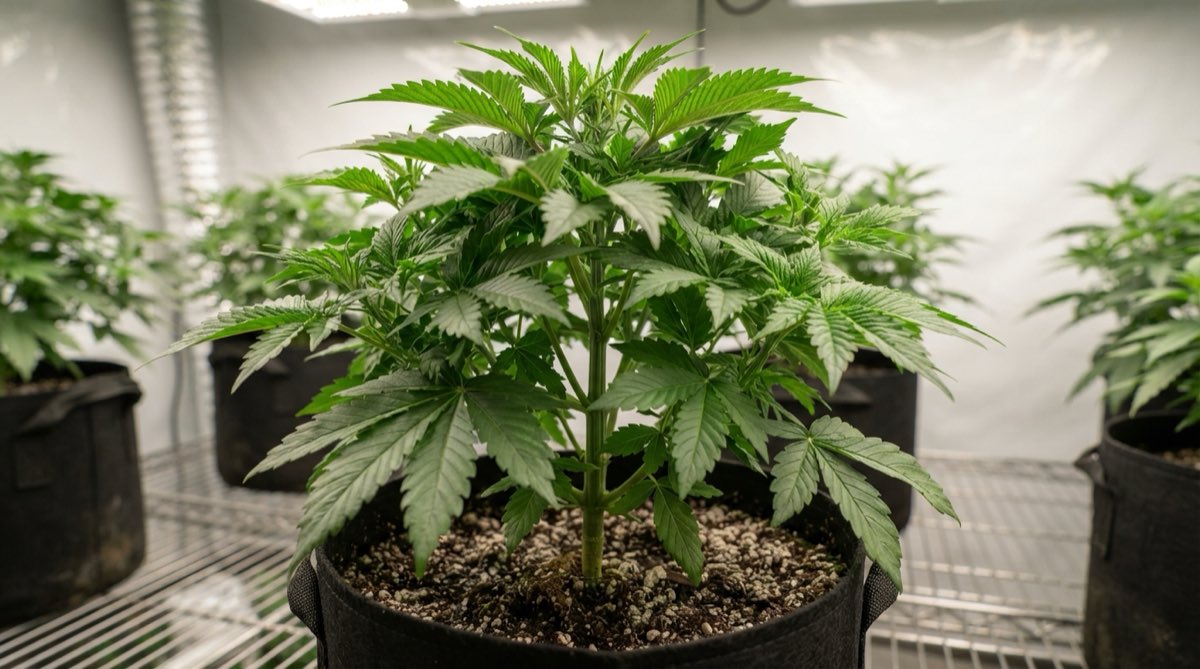
The vegetative stage is your plant’s construction phase. With roots established, growth shifts into high gear — some plants add inches per day — and everything you do now sets the ceiling for your harvest. Bigger, healthier veg plants carry more bud sites into flower. This guide covers light, feeding, training, and the decisions that matter most.
When veg starts and how long it lasts
Veg begins once your seedling has 4+ sets of true leaves and visibly takes off. How long you stay in veg is your choice with photoperiod plants — indoors they keep vegging as long as they get 18+ hours of light. Most indoor growers veg 4–8 weeks; outdoor plants veg until late summer’s shortening days flip them naturally. Autoflowers veg on their own schedule (usually 3–4 weeks) regardless of light hours.
Light: the growth engine
- Indoor schedule: 18 on / 6 off is the standard. Keep it consistent — timers, not memory.
- Intensity: now the plant wants strong light. Follow your LED manufacturer’s veg height (commonly 18–24 inches); watch new growth — praying-up leaves are happy, taco-ing or bleached tops mean too close.
- Outdoors: the sunniest spot you have. Cannabis in veg is a sun-eating machine.
Feeding: nitrogen leads
Veg is the nitrogen-hungry phase — it’s the N in the leafy growth equation.
- Use a veg-formula nutrient (higher N) and start at half strength, working up only as the plant asks.
- Water/feed when the top 1–2 inches of soil are dry; deep, thorough waterings beat frequent sips.
- Target soil pH 6.0–7.0 (hydro/coco 5.5–6.5). Most “deficiencies” are actually pH lockouts — check pH before adding more food.
- Leaf language: pale overall = hungry; dark, clawed tips = overfed. Adjust one variable at a time.
Environment
- Temperature: 70–85°F (21–29°C) lights-on, ~10°F cooler at night
- Humidity: 40–60% — lower than seedling stage as roots take over the drinking
- Airflow: constant gentle circulation thickens stems and keeps pests and mold guessing
Training: the highest-ROI work in the grow
Untrained plants grow like Christmas trees — one big top, small everything else. Training builds a flat, even canopy of many tops, and it’s the single biggest yield lever you control.
- LST (low-stress training): gently bend and tie the main stem sideways so side branches rise level with it. Beginner-safe, works on autos too.
- Topping: snip the main growing tip above the 4th–5th node — the plant splits into two main colas. Repeat on new mains for four. Photoperiods only; give a week of recovery per top.
- SCROG: a horizontal net that turns the whole canopy into an even grid of bud sites — the indoor yield-maximizer.
- Defoliation (light touch): remove big fan leaves that shade lower bud sites late in veg. Take a few at a time, never a strip-down.
Common veg problems
- Slow growth, dark soggy soil — overwatering again; let it dry out and lighten your schedule.
- Yellowing from the bottom up — classic nitrogen deficiency (or pH lockout — check pH first).
- Long stretchy gaps between nodes — light too weak or too far.
- Spider mites / fungus gnats — inspect leaf undersides weekly; sticky traps for gnats, neem or insecticidal soap early for mites. Veg is when pest problems are still easy wins.
Vegetative FAQ
How big should my plant be before flowering?
Indoor plants roughly double in height after the flip — flip when they’re about half your space’s limit. Bigger isn’t always better; even canopy beats tall plant.
Can I veg under 24-hour light?
You can, but 18/6 gives comparable growth for 25% less power, and the dark rest period appears beneficial. It’s the community standard for a reason.
Do autoflowers need a light-schedule change to flower?
No — they flower on age, typically starting weeks 3–5 automatically. Just keep them on 18/6 (or 20/4) their whole life.
Next step: flowering
Structure built, canopy trained — time for buds. Continue to the Flowering Stage Guide, or revisit the seedling stage and the full Grow Guide.
Want high-yield genetics for your next run? Browse the catalog — check the yield rows on every product page.